
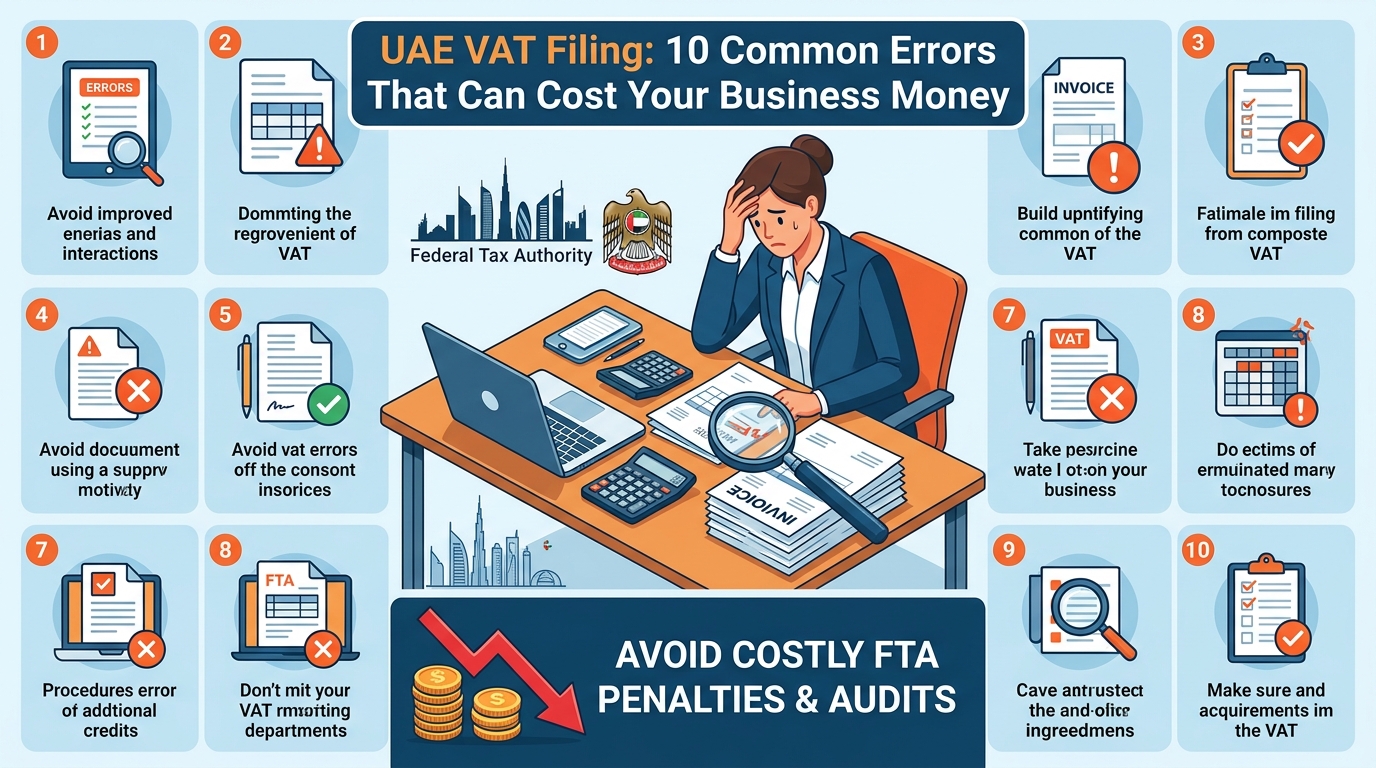
VAT filing is an important compliance responsibility for businesses registered for VAT in the UAE. While the process may appear straightforward, even small mistakes in VAT calculations, records, or return submissions can lead to financial losses, penalties, or unnecessary compliance issues.
For businesses, accurate VAT filing is not only about meeting deadlines. It also requires maintaining proper records, reporting the correct figures, and understanding which transactions should be included in the VAT return.
Here are 10 common UAE VAT filing mistakes businesses should avoid.
1. Missing the VAT Filing Deadline
One of the most common mistakes is submitting a VAT return after the required deadline.
Businesses registered for VAT must submit their returns and pay any VAT due within the applicable deadline set by the Federal Tax Authority (FTA). Missing the deadline can result in penalties and may create additional compliance complications.
How to avoid it:
Maintain a VAT compliance calendar and prepare the required information well before the filing deadline.
2. Entering Incorrect Sales Figures
Incorrect sales figures can affect the amount of output VAT reported in the return. Errors may occur when invoices are missed, duplicated, or recorded incorrectly in accounting systems.
Even a small difference between your accounting records and VAT return can create problems during a review or audit.
How to avoid it:
Reconcile sales invoices with your accounting records before submitting the VAT return.
3. Claiming Input VAT Incorrectly
Businesses may be entitled to recover VAT paid on eligible business expenses, but not every expense automatically qualifies for input VAT recovery.
Claiming VAT on personal, non-business, or otherwise ineligible expenses can result in incorrect VAT reporting.
How to avoid it:
Review expense invoices carefully and confirm that the expense qualifies for input VAT recovery before including it in the VAT return.
4. Failing to Keep Proper Tax Invoices
A valid tax invoice is an important supporting document for VAT records. Businesses sometimes attempt to claim input VAT without maintaining appropriate documentation.
Incomplete or incorrect invoices can make it difficult to support VAT claims if the business is reviewed by the FTA.
How to avoid it:
Keep properly issued tax invoices and organize them systematically with your accounting records.
5. Mixing Personal and Business Expenses
When personal and business expenses are recorded together, it becomes difficult to determine which transactions are genuinely related to business activities.
This can lead to incorrect input VAT claims and inaccurate accounting records.
How to avoid it:
Keep business transactions separate from personal spending and maintain clear supporting documentation for business expenses.
6. Using the Wrong VAT Treatment
Different transactions may have different VAT treatments, including standard-rated, zero-rated, exempt, or out-of-scope transactions.
Applying the wrong VAT treatment can result in under-reporting or over-reporting VAT.
This is particularly important for businesses dealing with different types of customers, supplies, or transactions.
How to avoid it:
Review the VAT treatment of different transactions carefully and seek professional advice when the correct treatment is unclear.
7. Ignoring Credit Notes and Adjustments
Refunds, returned goods, discounts, and cancelled invoices may require adjustments to previously reported VAT figures.
If credit notes or other adjustments are not properly recorded, the VAT return may not accurately reflect the business’s actual transactions.
How to avoid it:
Maintain a proper record of credit notes, refunds, and adjustments and ensure they are reflected correctly in the relevant VAT records.
8. Poor Record Keeping
Accurate VAT filing depends on accurate financial records. Missing invoices, incomplete expense records, poorly organized documents, and inconsistent bookkeeping can make VAT reconciliation much more difficult.
Poor record keeping can also increase the time and cost involved in correcting errors.
How to avoid it:
Maintain organized accounting records and regularly reconcile VAT-related transactions instead of waiting until the filing deadline.
9. Not Reconciling VAT Accounts Before Filing
Submitting a VAT return without reconciling the figures against your accounting system is a risky practice.
Differences can occur because of duplicate invoices, missing transactions, incorrect VAT rates, or accounting adjustments.
A VAT reconciliation helps identify these issues before the return is submitted.
How to avoid it:
Compare your VAT return figures with your sales, purchase, and accounting records before filing.
10. Treating VAT Filing as a Last-Minute Task
Waiting until the final days to prepare a VAT return can increase the likelihood of mistakes.
Last-minute filing may leave little time to identify missing invoices, correct accounting entries, verify VAT calculations, or resolve discrepancies.
How to avoid it:
Prepare your records throughout the VAT period and review them regularly. Professional bookkeeping and accounting support can also make the filing process more efficient.
Why Accurate VAT Filing Matters
VAT mistakes can cost a business more than just money. Incorrect returns can create additional administrative work and may result in compliance concerns.
A structured accounting process helps businesses keep their VAT records accurate, identify discrepancies early, and prepare returns with greater confidence.
For growing businesses, professional VAT filing services in the UAE can provide additional support with record review, VAT calculations, reconciliations, and compliance procedures.
How Professional Accounting Support Can Help
Managing VAT alongside daily business operations can be challenging, particularly for small and growing businesses. Professional accounting support can help businesses maintain organized records, monitor VAT transactions, and prepare accurate VAT returns.
